




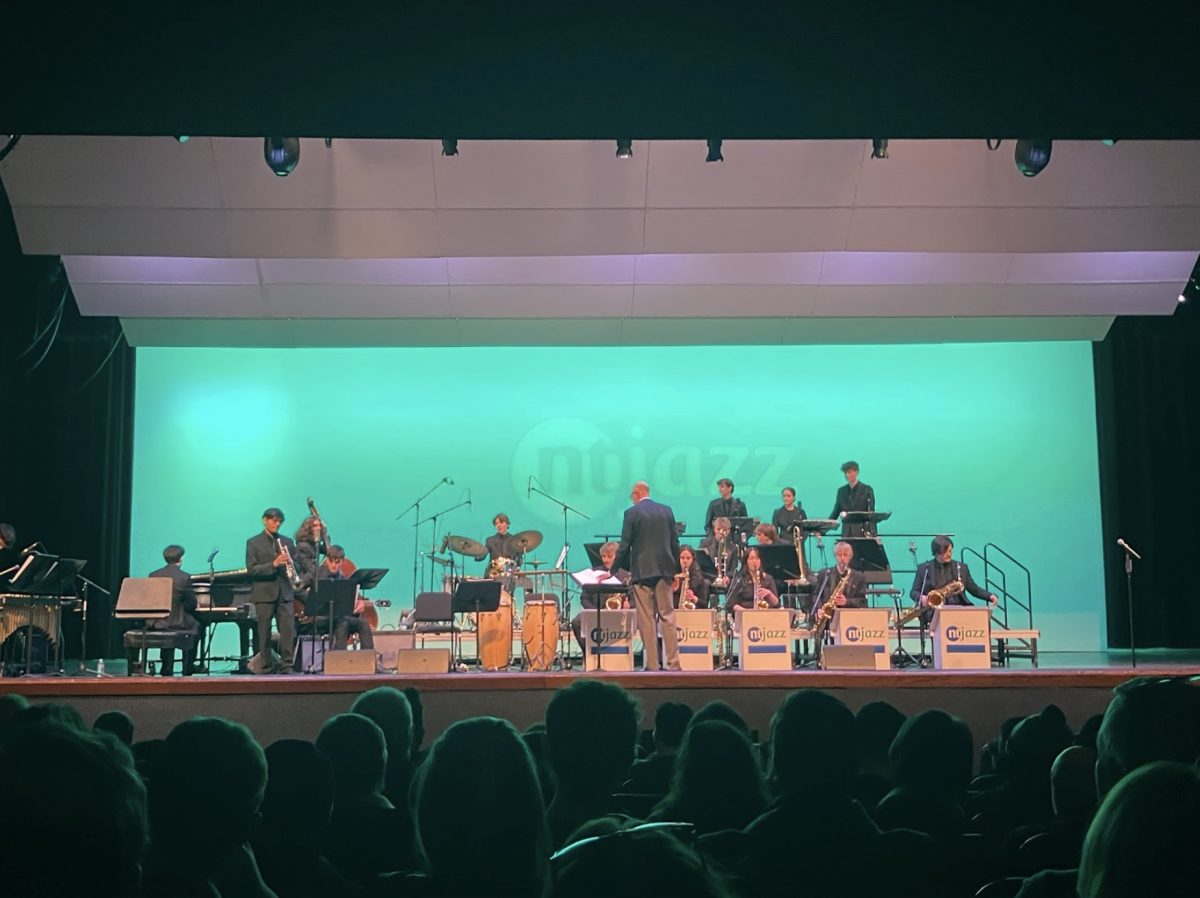
On Feb. 7, New Trier High School hosted its 43rd annual Frank Mantooth Jazz Festival which brought together jazz programs from more than 40 participating local middle and high schools. From 8:30 a.m. to 9:30 p.m., students performed and took part in clinics led by musical experts and masterclasses with the evening headliner: the Roy Hargrove Big Band.
“It’s not often that you have the opportunity as a high schooler to attend and be a part of a world-class music festival, and that’s really what this is,” junior pianist Ian Sturgis said. “We get world class clinicians doing private lessons with a bunch of local classic bands. It’s really a wonderful opportunity that you really cannot get anywhere else in the world.”
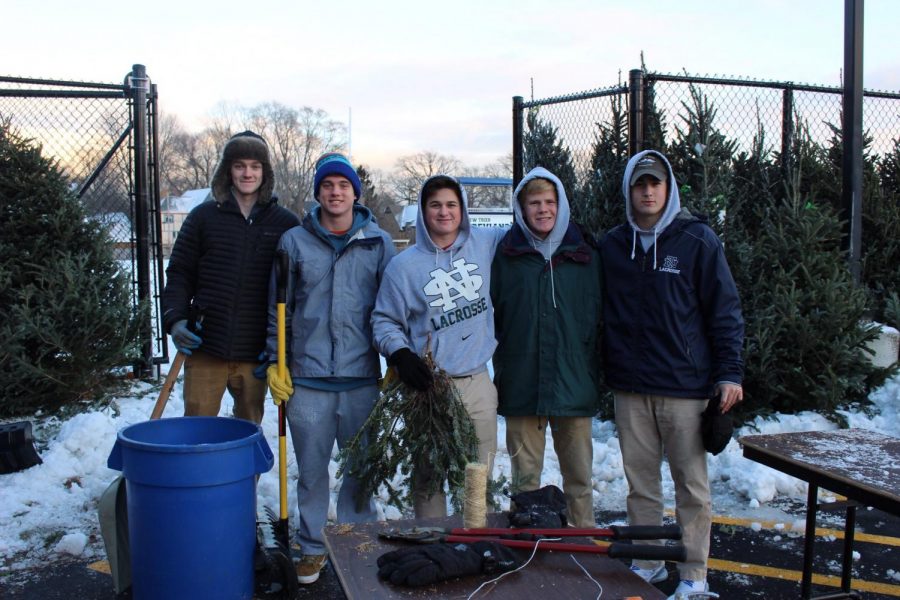
New Trier students spent months preparing for Jazz Fest, which involved not only practicing their instruments and rehearsing, but also physically setting up the event in the days leading up to the celebration. From hauling equipment to preparing performance spaces, students played an indispensable role in helping the festival run smoothly. Sturgis described the process as one that strengthens the program’s teamwork.
“It really is a tight-knit community, and you can see that with Jazz Fest,” Sturgis said. “It’s set up almost entirely by students who are working together—we’re pushing pianos around, moving music stands, and it’s just a whole thing,”
The New Trier Jazz Ensemble I students spent an immense amount of time preparing for their big opener. They played a tight set of five songs, beginning with “The Shade of the Cedar Tree” by Christian McBride and ending with “I’m Gonna Live ‘Till I Die” by Hoffman, Kent, and Kurtz featuring vocalist Emma D’Souza. The performance stood out as a highlight for both the audience as well as the members of the Jazz Ensemble I group.
“One of the big things I think about when I perform is just trying to be immersed in the music and to express myself,” junior guitarist Justin Hoerdemann said. “Playing live is probably one of the best experiences I’ve ever had. It’s very surreal, and it’s just so fun.”
Following the student performances, the Roy Hargrove Big Band took the stage for the remainder of the concert. The band was founded by Roy Hargrove, a highly influential American trumpet player and composer who passed away in 2016. Today, the ensemble continues to honor his legacy while evolving musically, featuring original members such as Bruce Williams on alto saxophone, Jason Marshall on baritone saxophone, Saul Rubin on guitar, and Willie Jones III on drums, along with newer members. The band also welcomed on stage Bobby Watson, a multi-Grammy nominated saxophonist, composer, bandleader, educator, and producer who sits among the pantheon of present-day jazz greats with a career spanning over four decades.
“I’m always trying to pay attention to what bands are out there doing cool things,” jazz band director Nic Meyer said. “I want to make sure that the band that plays the evening concert is the kind of ensemble that’s going to bring a lot of positive energy to the concert. I think the Roy Hargrove Big Band put on an awesome show, and everybody seemed to love it.”
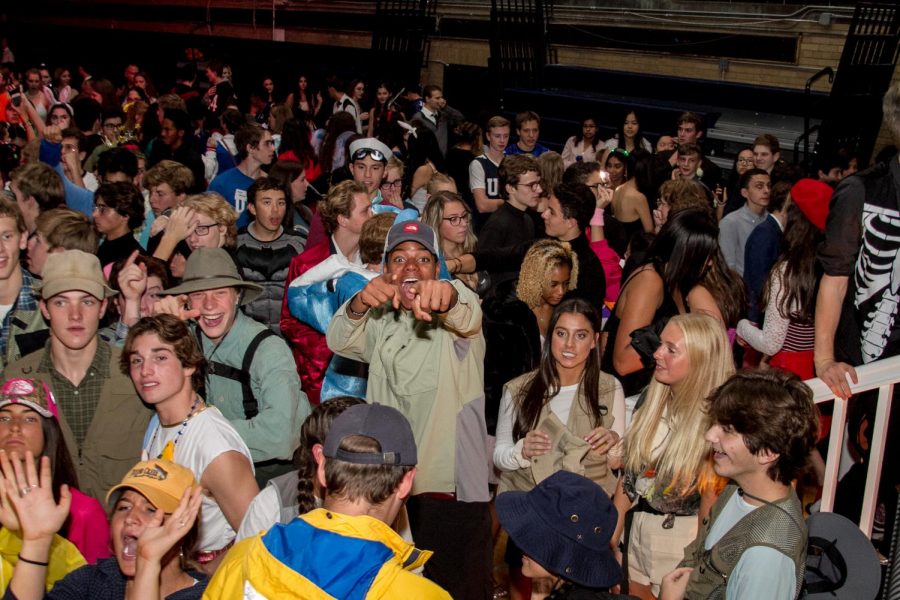
The audience responded with enthusiasm throughout the performance. Students, parents, and even alumni filled the auditorium, offering loud applause, cheers, and multiple standing ovations, and maintaining high energy. The performance made it a night to remember, especially for the students involved.
“A lot of students leave [the concert] feeling really energized and hyped up about wanting to continue their work on their instrument, and maybe even wanting to get a little more serious about learning the music,” Meyer said.
Beyond the performers, Meyer highlights the broader significance of jazz as art rooted in American history and culture, with strong ties to Chicago and its own music scene. As a city largely known for the development of jazz and blues, events such as the Jazz Fest allow the area’s students and community to directly engage with and connect to that history, while ensuring that the music continues to thrive for generations to come.
“I want audiences to leave here knowing that jazz is this really vital art form—sometimes it’s challenging to listen to, sometimes it’s super beautiful to listen to, and sometimes it’s really exciting,” Meyer said. “It’s the kind of music that if you give it a little time and put in a little effort as a listener or a player, it just pays back.”