





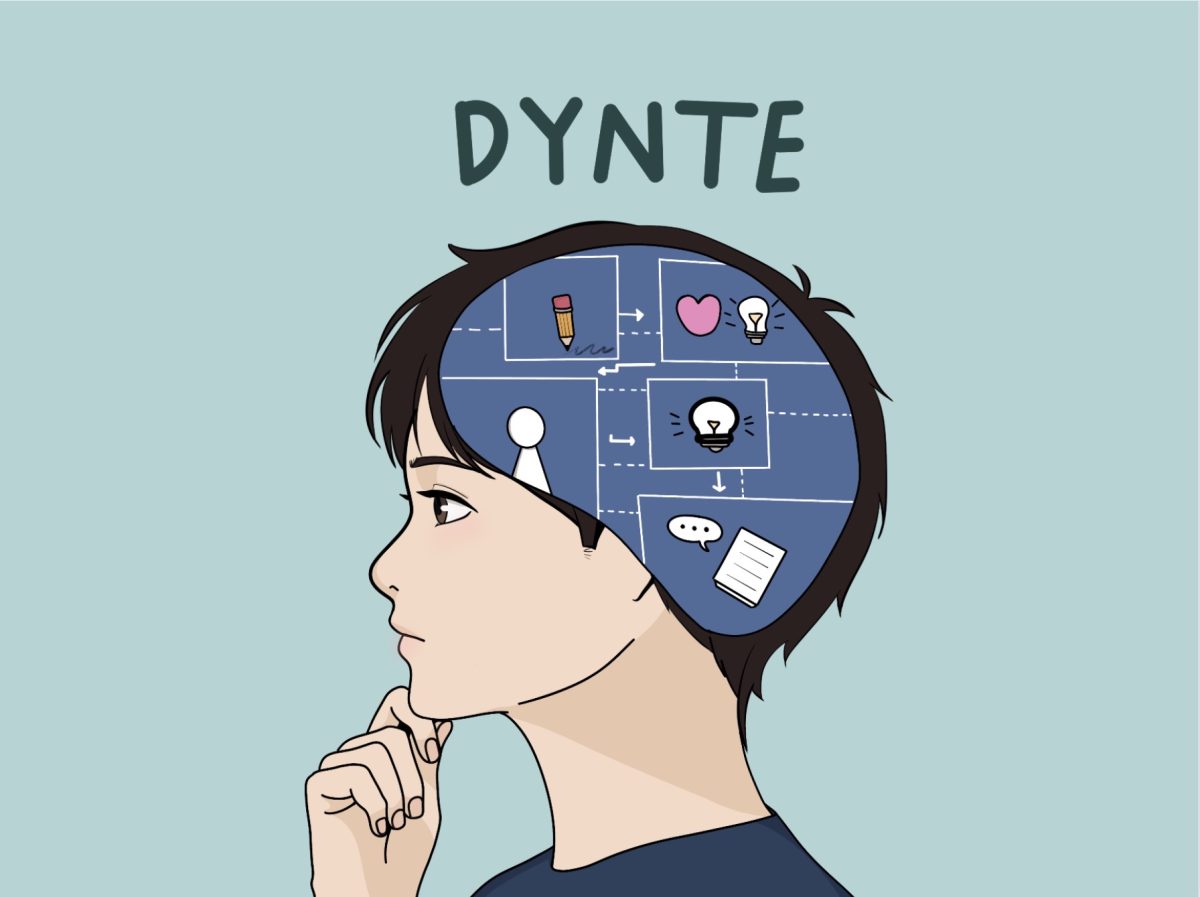
During the first semester, New Trier High School officially piloted the Freshman Seminar Program—a program for freshmen students centered around learning human design center skills, such as creative problem-solving, bias towards action and creating a journey toward their own goal, to help students find meaning in their four years at New Trier. The program, which began first semester with six six-week sessions, now runs during second semester with nine-week sessions where students who have a study hall period during either 5B, 6A, 6B, and 7A have the option to meet in the Design Hub on Fridays instead.
At New Trier, there are a few faculty members such as Applied Arts Department Chair Jason Boumstein and Art Faculty member Mark Bowers with knowledge in human-centered design: a mindset focused around problem-solving using both empathy and iterative skills. The administration then approached these staff members about creating a human-centered design opportunity for students and then began working on the Freshmen Seminar Program during this past summer and fall Northfield Campus Principal Paul Waechtler explained.
“We’re obviously not looking at 14-year-olds to design their whole life, but how do they get the most out of time in New Trier was kind of how the idea came up,” Waechtler said.
The Freshmen Seminar Program is inspired by a course called “Design Your Life” found in over 600 universities, including Northwestern University, and focuses on how students can use an engineering mindset to learn what they want out of their life. The pilot’s co-creators and facilitators Boumstein and Bowers introduced the program at New Trier in hopes to add more meaning to students’ experience.
“Our idea was how do we instill these mindsets so students know that their life is an iteration,” Boumstein said. “It’s a prototype and they can re-evaluate that, understand their energy, their engagement, where they have flow, where they could actually register for an activity where they could look for outside New Trier [the] type of support with service learning [and] potential internships down the road. What courses could help them grow and learn about a potential career that they’re interested in? Not only that, but what courses could provide skills that could help them in that potential growth for a career.”
Now throughout nine classes, students learn the program’s six fundamental themes: Mindsets & Design, Know Yourself, Explore Paths, Imagine Possibilities, Plan Your Odyssey, and Storytelling & Prototypes.
“[We’re bringing students through the] process of one: understanding design mindsets and how you apply that for the rest of your life,” Boumstein said. “Two, how do you understand yourself? So if you understand yourself and your future ambitions, maybe that will help you connect different opportunities at New Trier and outside of New Trier. And then three, now how do you take that and some of the challenges you have with it? How do you reframe it?…And then how do you finally plan that and connect it?”
Each meeting of the pilot program focuses on vertical learning in a judgement-free zone where students move around and interact with one another, rather than sitting at a desk and typing on an iPad.
“The beauty of human-centered design is that it’s not a solitary thing,” Bowers said. “It involves all the students, and so, you might get an idea or be springboarded by what somebody else said. And that’s the idea of it. The other thing, too, is when [students] enter into the space, which is a hub, it’s a different kind of ambiguity. We really want students to not be aiming for an answer, but to explore and then kind of reiterate and to rethink and to take ideas a little bit deeper than just surface level.”
In the program, students have done activities such as quick brainstorming, utilizing sticky notes, organization and reflection on their progress and understanding of the course.
“There are some reflection points so we could look at ‘what do we experience here?’” Boumstein said. “But, it’s through using different design methods and protocol in order to create movement thinking with your hands. That means moving around sticky notes to synthesize and to brainstorm and not be stuck on one thought, and all these different, I would say, facilitated methods to get you to think in a way quickly that maybe you did not think before.”
Additionally, the skills taught in the Freshmen Seminar Pilot Program aligns with New Trier’s 2030 vision to create a culture where “students discover purpose in their intellectual, creative, social, and interpersonal endeavours” as well as the Characteristics of a New Trier Graduate, which are to foster Resilient Healthy Individuals, Engaged Compassionate Global Citizens, Effective Courageous Communicators, Creative Critical Thinkers and Innovative Collaborative Problem Solvers.
“As part of 2030 goals and the Characteristics of a New Trier Graduate, when you think about the different characteristics, human-centered design does a really nice job of touching on each of those,” Bowers said. “And so the pilot narrows that down more so in the sense that it’s thinking about students in their four-year experience and beyond New Trier and what they can learn and grow about themselves in order to fulfill that portrait.”
Looking ahead to the 2026-2027 school year, the Freshmen Seminar PIlot Program will grow into a bigger class, according to Waechtler.
“Next year, we’re going to expand the number of people that can be facilitators, and so we’ll be able to read probably hundreds and hundreds of kids,” Waechtler said. “[Freshmen] always have the opportunity. We won’t force them to do it, but they’ll be offered it. And so it won’t be fully implemented, but it’ll certainly be a much bigger pilot than we currently have.”
Boumstein also aims to attract more students to the program.
“The goal is to have as many students as possible be able to do this because ultimately we want our students to thrive in this world that’s becoming changing rapidly, but also be able to have the best experience here, while they’re here for four years to prepare them for whatever they want to do,” Boumstein said.