









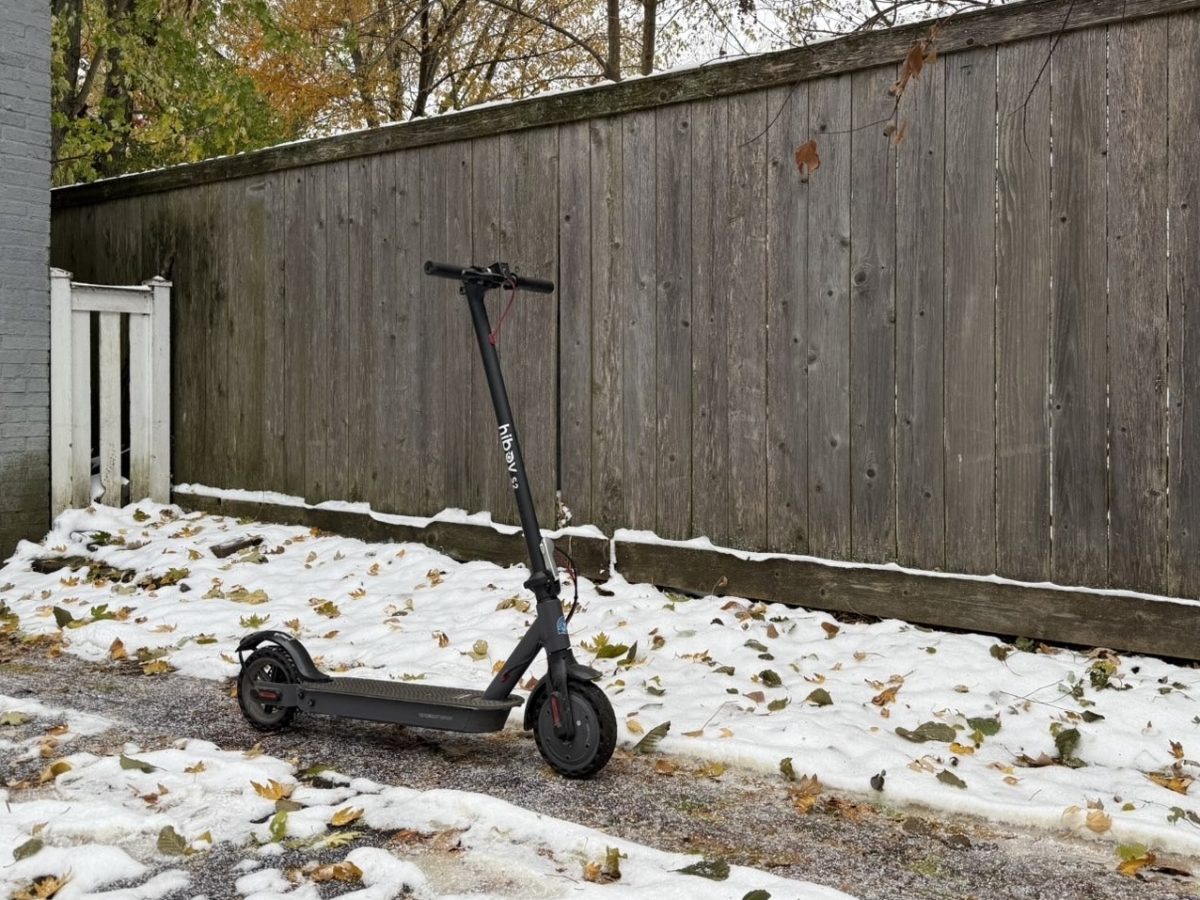
Just a week after I got my license, I was driving home from an extracurricular activity when I finally reached my breaking point: I couldn’t tolerate the electric scooters anymore.
I was driving through a Winnetka intersection and barely had time to react as a pre-teen girl on an electric scooter sped down the road, heading straight for my car. I had already driven through the intersection by the time she crossed, but what scared me the most was her lack of spatial awareness. She hadn’t even slowed down—she rode full speed through the intersection without looking down the road for any approaching cars.
If I had driven through that intersection a few seconds earlier…
It’s terrifying to think about the what-ifs.
This isn’t an uncommon issue. Recent debates concerning electric scooters have been prevalent in the North Shore suburbs. In July, Highland Park officials enforced age restrictions for low-speed e-bikes, stating that the user must be over the age of 16 to drive it and 18 to operate a low-speed electric scooter.
On Tuesday, Sept. 9, Winnetka village trustees publicly debated the use of electric scooters, and in October, the village said that in order to operate an electric scooter, you must be at least 18 years of age with a valid driver’s license. Other Chicago area suburbs have slowly started to question the use of electric scooters—and it shouldn’t stop there.
Electric scooters are dangerous enough for kids who drive them on the streets. Freshly licensed teenagers are on the roads; some are hyper-cautious while others are careless, becoming dangerous for scooter-riders speeding down busy roads.
This past summer, I noticed a surge of electric scooters on the road, all driven by young kids. I assumed they had gotten these pricey gifts for Christmas and were excited to try them out on the roads after the snow had melted and the winter slush was gone. None of the kids were ever accompanied by a parent; they were either alone or in a group.
I didn’t mind them until I was personally targeted on the sidewalk or crossing the street. The electric component of the scooters allow them to be almost soundless, similar to electric cars, which tend to creep up on you without any warning. Don’t get me wrong, I’m all for sharing the sidewalk—until I’m three seconds away from being run over by a ten year old going 25 miles per hour.
What happened to the basic kick scooters that used to crowd the sidewalks? I remember using a small pink scooter that was probably the perfect size for me at the time. Its rubber handlebars and tiny wheels are distinct from the larger size and high quality of today’s battery-powered scooters. With the rise of new and improved technology, I’ve noticed a decrease in popularity for kick scooters.
Electric scooters are faster and bigger, making them suitable for older kids. At some point, you can’t take your old rusty scooter to school anymore. You need something that will provide you with a sense of independence, and your bike just isn’t exciting enough. I’m sure parents aren’t eager to buy an electric scooter for their child; e-scooter prices range from $130 to a shocking total of $1,900. That’s not pocket money.
Instead of banning these vehicles, most village councils have opted for age restrictions. Although I’ve heard stories of crashing through fences, narrowly escaping collisions with cars, and losing balance down steep hills, the scooters aren’t a huge threat when they’re used correctly by someone who knows the dangers and the rules of the road. Suburbs such as Highland Park and Winnetka have already begun to enforce age restrictions, and every suburb should do the same.
Banning the scooters would be an unnecessary action; but age restrictions seem fair. Parents shouldn’t have to deal with the ridiculous costs of the scooters and worry for the safety of their children, and drivers everywhere shouldn’t have to stress about sharing the road with inattentive children hurtling down the street.