




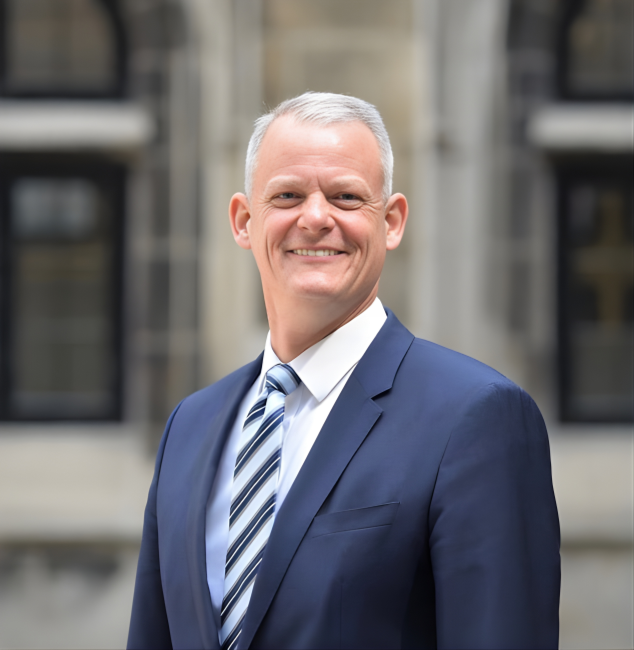
After 14 terms, Jan Schakowsky’s time in Congress is over. Now, a multitude of Illinoisans and non-Illinoisans alike have kicked off their campaigns to replace the tenured senator. One of the ballot options is Phil Andrew, a homegrown candidate whose platform focuses on gun control, affordability, and a new perspective on the political landscape.
Andrew, a Loyola Academy alum and gun violence survivor, began his grassroots campaign to represent the 9th District after spending his career as a hostage negotiator and special agent in the FBI.
But before becoming a FBI agent, Andrew attended the University of Illinois Urbana-Champaign, where his collegiate years were disrupted after Andrew was a victim of the Hubbards Wood School shooting in 1988. After the shooter fled the school, she ran to the Andrew’s household, holding Andrew and his parents hostage. He was able to negotiate the release of his parents but was shot in the chest after attempting to disarm the shooter.
Since that life-changing moment, Andrew has become very involved in gun-violence advocacy. One of his largest accomplishments is his work with the Brady United Organization, whom his campaign is now endorsed by. Their partnership led to the passing of the Brady Bill, which was one of the first pieces of legislation towards restricting the ownership of handguns, and is widely considered the start of modern gun control.
Another facet of his gun violence advocacy includes his founding of Pax Group, a consulting company that helps clients in a multitude of industries deal with conflict, security, and crisis response.
“One of the things that we say at Pax Group is that safe people thrive,” Andrew says. “When people aren’t worried about their physical safety, when they’re not worried about bias, discrimination, and harassment, they tend to do really well.”
To get an idea of what Pax Group does to make “safe people thrive,” Andrew discussed an incident that occurred at the University of Arizona.
In 2022, an attack on the university resulted in the murder of professor and head of the Department of Hydrology and Atmospheric Sciences Dr. Thomas Meixner by a former graduate student.
After the attack, the school hired Pax Group to do an extensive review on how to improve their threat security and management. After several months of review, the group came up with 33 crucial points to develop their safety systems.
“The most important thing was elevating their human systems and making sure people knew what to look for, where to report it, and how to respond in a crisis,” Andrew says.
The enhancement of the “human systems,” and everyone in the community working together is fundamental to Andrew’s gun control policy.
“It’s educating students and the entire community as to what to look for and where to report it,” Andrew says. “That means the community has to be responsive. Whether it be law enforcement, teachers, parents, other trusted adults in the community, faith groups, park districts, townships. All of them working together can actually create comprehensive solutions.”
Before founding the Pax Group, Andrew served the country for 21 years with the FBI’s Chicago Division.
Andrew believes that the skills he gained as a hostage negotiator will bring a new type of outlook to politics.
“The skills around listening and collaboration and teamwork, really the we over the me, are critical skills that you don’t really see developed, nurtured, or rewarded in political life,” Andrew says.
This fresh, outside perspective is something Andrew finds very advantageous for him in this election.
“I think [coming from outside politics] gives you the ability to see clearly,” Andrew said. “You see what needs to be done without being encumbered by financial alignments, like when you’re taking money from PACs.”
Andrew’s refusal to accept political action committee (PAC) money is a defining characteristic of his campaign, as many of their donations come from the connections that Andrew has built in the district, Illinois, and around the country.
“We have 70% of our donors come from Illinois,” says Andrew. “There are a lot of folks that are in my network, that I’ve worked with, that I’ve served with, that I’ve raised my family with. When people in your network are willing to echo why they’re [donating] to their network, it says something about the grassroots and how our message and my background is resonating.”
Another differentiator between Andrew and his opponents–and especially from former congresswoman Schakowsky–are his plans for how long he will hope to spend as a representative.
“My commitment is to not serve for a lifetime,” Andrew says. “I will find lots of ways to serve my country, but I will only serve in Congress for three to five terms, and that is distinctive of anybody else in this race.”
Additionally, while growing up in the area, Andrew built connections at New Trier High School and Loyola alike, and many of these people have come back to assist him today.
Despite swimming and playing water polo for the Ramblers, Andrew was quite familiar with NT and its residents, often swimming for their club swimming teams during the offseason.
“Because I swam in the New Trier program, I would swim with all those guys and girls in the summer,” Andrew says. “Then we compete during the year. So many of them, I’m friends with today and are helping out with the campaign today.”
Yet today, Andrew continues to grow new relationships with citizens of the 9th district, travelling around during his campaign meeting prospective voters
Andrew recalls meeting a restaurant owner from Buffalo Grove, who had immigrated from Cyprus and created a hometown favorite in the 9th District. But, he’s struggled as of late.
“It’s kind of a famous restaurant in Buffalo Grove, he’s been in business for 30 years and it’s a go to place,” Andrew says. “And then you hear his story about how he’s under strain and not being able to find workers because of the ICE and immigration action… He’s caring for long term employees, some of which are his family, and he’s spending more and more on healthcare, and he’s really having trouble being able to hire more people and still meet their needs in terms of providing healthcare, which he cares about.”
Affordability is connected with other key priorities of Andrew’s campaign.
“[It’s] recognizing the connectivity of coherent immigration policy, affordable and accessible healthcare, access to childcare, all of these things are interrelated,” Andrew says.
Andrew says this combination demands someone from outside the Congressional landscape to step in and solve the issue of affordability.
“There’s a lot of economic polarity, the rich are becoming hyper rich, and the middle class is being squeezed, and we’re putting a lot of people on the margins,” Andrew says. “That really requires folks to go to Congress, who are not embedded with special interest… and build the multi-year strategy for growing our economy in ways that everyone can participate and benefit.”
But going back to the 9th, Andrew has one apologetic message for students of the area.
“I’m sorry,” Andrew said. “I’m sorry that you’ve grown up in a generation where we haven’t taken care of gun violence. I’m sorry that you’ve grown up in a generation that has seen only dysfunctional politics and government.”
In addition to this message, Andrew has another for voters.
“They should vote for me because there is no one else with the skills, experience, background, and commitment,” Andrew said. “That is a record of service, of getting things done, of action, and particularly in a moment of crisis like this.”