



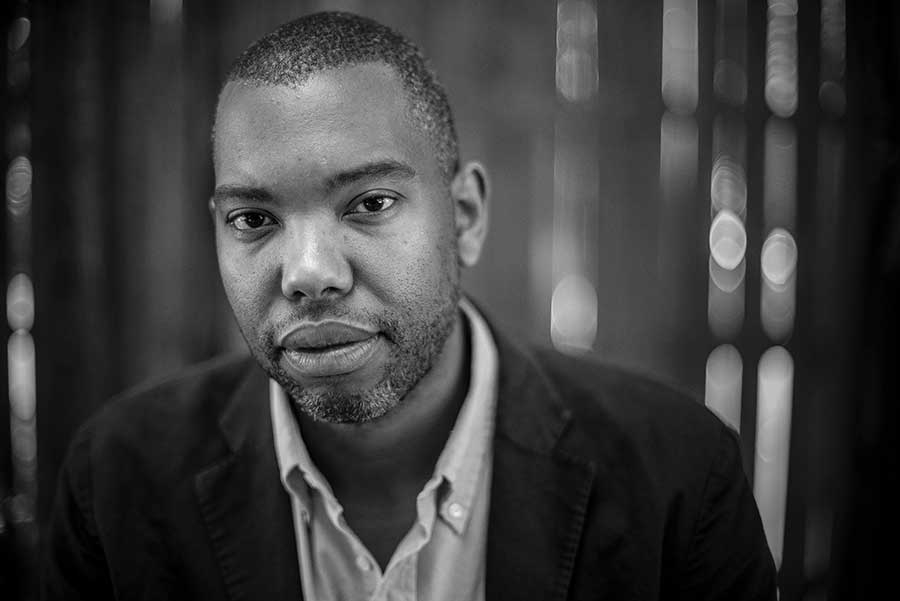


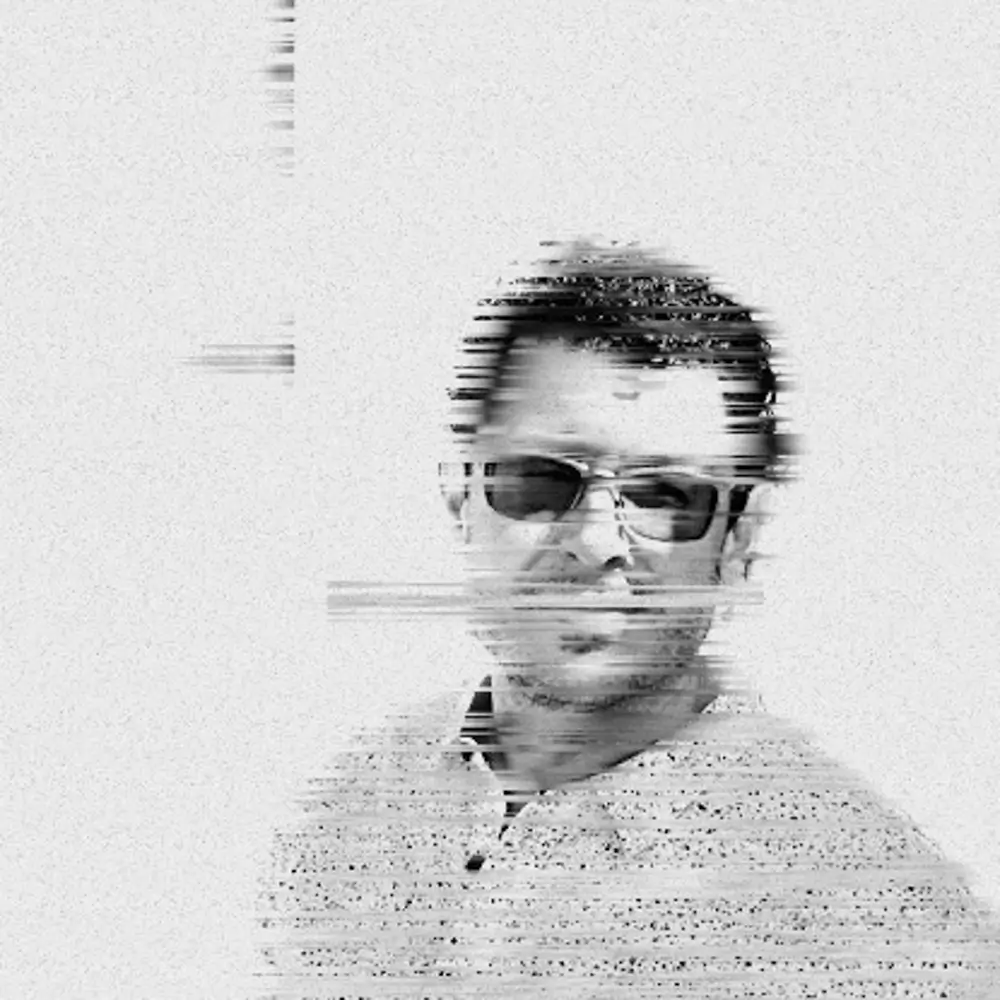
Flashback to 2016 in Northbrook, Illinois when New Trier High School social studies teacher Spiro Bolos started photographing life on the North Shore. There as an amateur, Bolos would photograph the forest preserves and the suburbs before he sold his minivan, moved to Chicago, and began photographing public transportation all with the click of an iPhone camera.
Now, as anything but an amateur photographer, Bolos captures unknowing strangers in street photography from places like the Ravenswood train station in Chicago to the Chicken Snack Shack in San Diego, California with his iPhone 16 Pro. What began as an interest in photography and other photographers turned into an entire photography Instagram account which, at the time of this article’s publication, has over 1,000 followers and 4,647 posts.
Growing up in Chicago, Bolos was never really interested in photography; instead, he took to activities such as music. Photography also did not feel “accessible” to Bolos as his family did not have enough money to buy a camera. However, in his midlife, Bolos attended photographer Brian Sokolowski’s presentation at the Out of Chicago conference where he listened to Sokolowski’s personal story of living in a single-residence occupancy and taking photos everyday. While listening to Sokolowski’ and looking at his photography, Bolos became inspired to dabble in the world of photography.
“[Sokolowski] had taken a photo of this young woman at Union Station in the Grand Hall, and she just has this look of despair on her face,” Bolos recalls. “And I was like, ‘oh, my God.’ And so he says ‘you see that photo?’ And we were like, ‘who is that?’ Well, some young woman. He goes, ‘no, that’s me.’ And we’re like, ‘no, it’s not.’ And he’s like, ‘a photo can be a self-portrait.’”
As a follower of his photography Instagram account and a 21-year colleague to Bolos, social studies teacher and former professional photographer Robin Forrest sees parts of Bolos that are reflected in his photography.
“Mr. Bolos is someone who I think is curious and observant about the world,” Forrest says. “And, I think that’s reflected in his photography, that innate sort of curiosity and that innate sort of being an observer of his environment and an observer of the world.”
Bolos’ curiosity for photography deepened when he watched “Finding Vivian Maier,” a documentary about how nanny Vivian Maier’s photography illustrated the social history of the mid-20th-century North Shore. Bolos found it fascinating to look at history with Maier’s perspective as a working woman and her photographic process.
“She was a nanny in the North Shore and then would drag the little kids down to the city and take pictures of strangers,” Bolos recalls. “I was like, ‘wow, if she’s doing that, what I’m doing is pretty tame by comparison.’”
However, the thing that kept Bolos going through his photography endeavor was the iPhone resting in his palm.
“Having the iPhone actually was a real motivator because it was just so easy to [take photos],” Bolos recalls. “Maybe I wasn’t making great photos, but I’m interested in the process and how a photograph can be both illuminating and misleading at the same time.”
As Bolos continued taking public transportation to his teaching job at New Trier, he attended seminars about photography, where he learned that photographers need a theme to link their photos.
At the same time, Bolos was also inspired by Chicago photographer Andrew Steiner’s photographs of people taking the Red Line, so he subsequently decided that public transportation would be the unifying factor in his photography.
“I just was taking photos of whatever I thought was interesting, and so that became more or less a focus,” Bolos recalls.
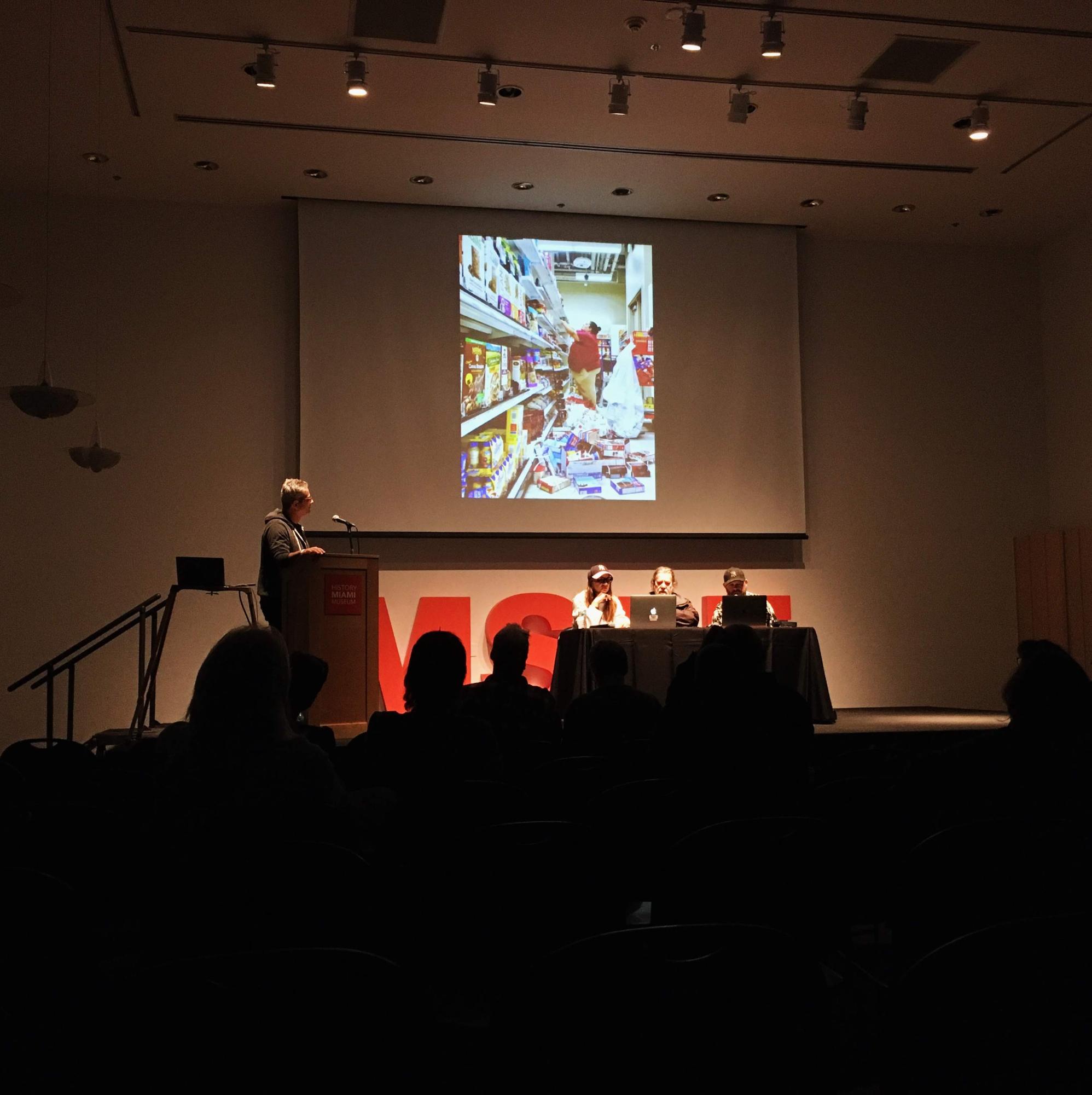
With his street photography focus, Bolos received critiques on his photography when visited his daughter Katina Bolos in Miami. There, Bolos attended the Miami Street Photography Festival (in “the best two for one” deal, Bolos describes) where one of his photos that captured the inside of a Target in Evanston appeared on a screen and became subjected to critiques by professional photographers.
“It was kind of like a little impromptu photo judging,” Bolos recalls. “And they had four or five of the best photographers in the country giving hot takes on random photos, and mine came up and they ripped it to shreds. And it was so much fun because it was like, ‘wow, if these guys are commenting on my photo, that’s pretty cool.’”
Instead of taking the critiques with a fixed mindset, Bolos focused on improving techniques, such as composition, in his photography. Bolos also joined Pure Street Photography, a Facebook group with over 11,000 members focused on street photography, where he also submitted his Target photo to receive critiques and constructive criticism.
“I’m like, well I want to try to be better in terms of my framing and that sort of thing,” Bolos recalls. “And it got to the point where when I do critiques, a lot of photographers don’t realize I’m even using a phone.”
Now, Bolos uses photo-editing apps, like Snapseed, where he plays with the different types of black-and-white filters, or he crops his photos to cut out unnecessary details, (such as a ceiling,) and follows photography’s rule of thirds.
“When Mr. Bolos approaches [photography], he’s approaching it, from like this art form,” Forrest says. “It’s a way of interacting with the world. Mr. Bolos thinks deeply about all of the elements of that, whether it’s looking at what other street photographers are doing, looking at what perhaps other photographers have done in the past or your contemporaries. So, Mr. Bolos is someone that when he is interested in something, he really likes to explore it.”
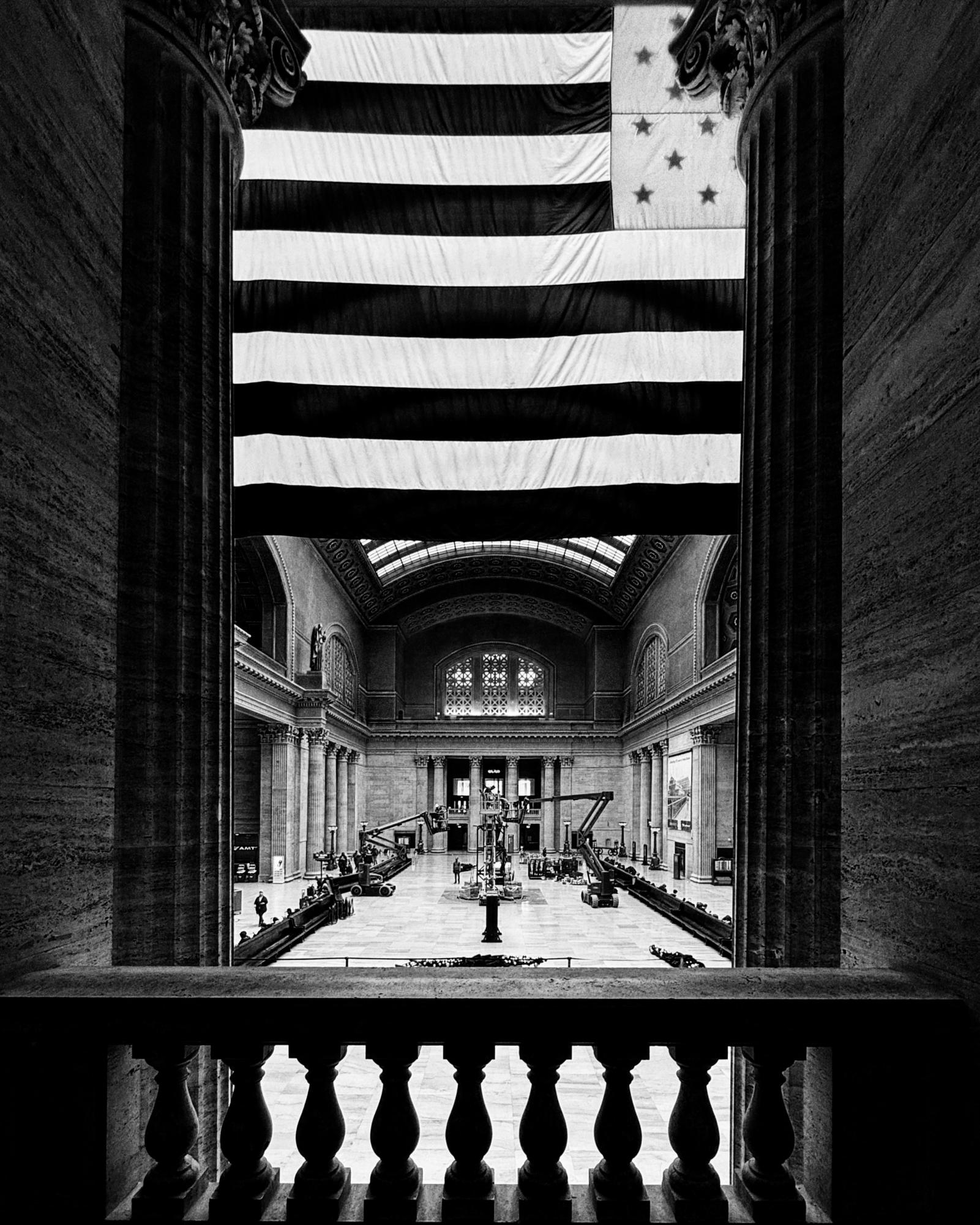
Every weekend, Bolos travels to Union Station to visit his 91-year-old mother. While in Union Station’s Grand Hall, Bolos recently photographed an American flag hanging in front of construction taking down the Christmas decorations. Bolos then added black-and-white filter on the photo and published it to his photography Instagram.
“I like this [photograph] because of the way the flag is dominating the scene, and I like the black and white because right now in America, people are feeling this force of the federal government that we haven’t had before,” Bolos says. “Americans are very much like they want the federal government off their backs, this whole idea. And so this represents our U.S. government.”
However, Bolos’ audience could also interpret his photographs differently, and as a photographer, Bolos has to accept their differing perspectives.
“You realize when you release something to the public, whatever interpretation they have is just as valid [as mine],” Bolos says. “And that’s something I think people don’t realize.”
In his social studies classes, Bolos sometimes does a “see, think, wonder activity” where students analyze and interpret photos by making observations and forming questions about the photo. Every time he runs the activity, Bolos not only sees diversity in how his students interpret photos, but a student also picks out a new detail that no one has ever shared before.
“That’s pretty cool, right? That you have this collective out there that can interpret things differently than your own perception,” Bolos says.
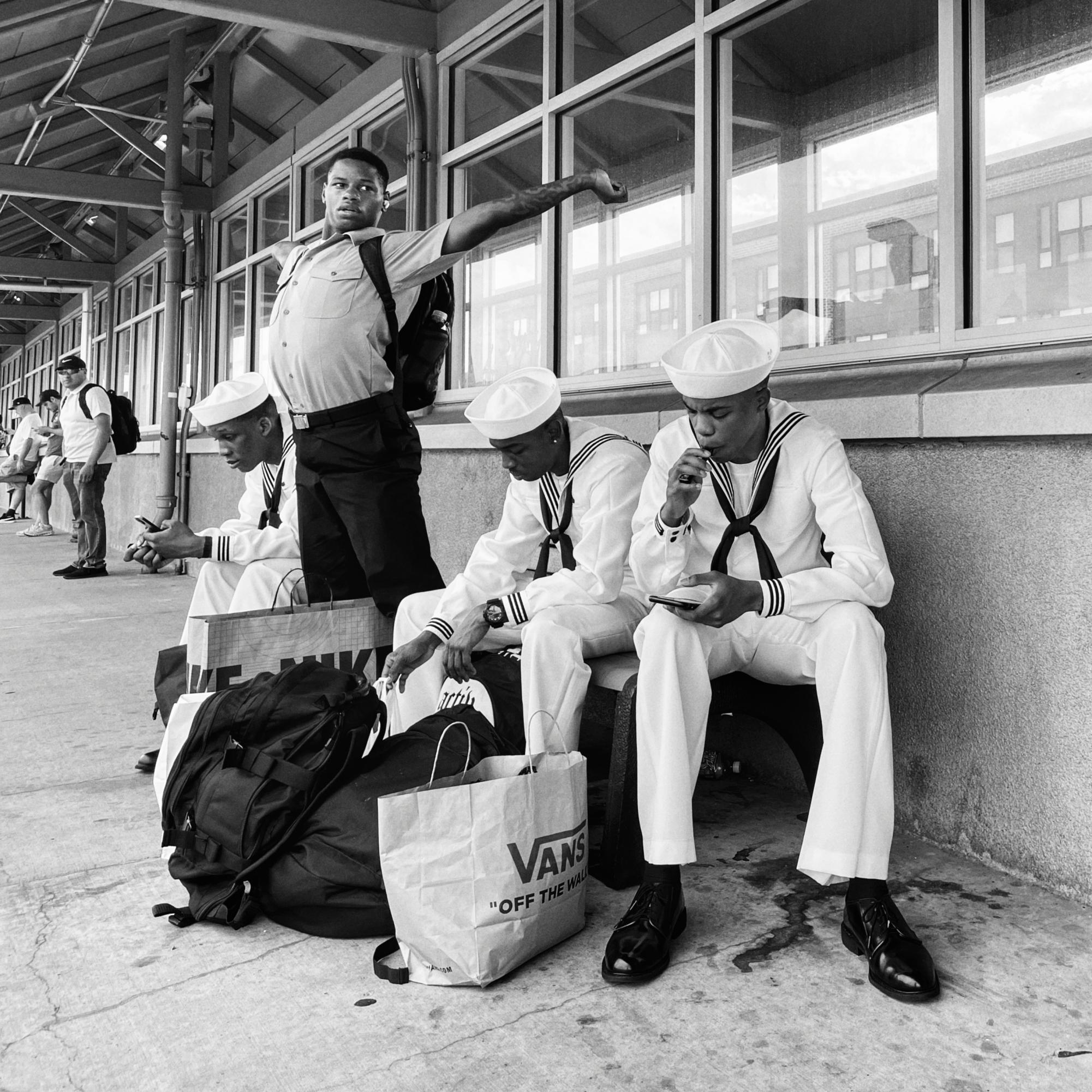
In the spring of 2025, Bolos took his most popular photo: a small group of navy recruits from the Great Lakes waiting at a train station in Chicago. The Great Lakes recruits are often not from Illinois, particularly from the North Shore suburbs, where seeing any form of military is rare.
“I like revealing a part of our society that sometimes doesn’t get the attention,” Bolos says.
In the photo, the Navy recruits are unaware that they are photographed. Bolos achieves this stealth by using covert iPhone photography techniques, such as using the volume button to take a photo instead of overtly tapping his finger on the camera app or holding his phone up to his ear and pretending to take a phone call while secretly taking a photo instead.
“I take advantage of the fact that phones are ubiquitous,” Bolos says. “Everybody’s got a phone. Everybody’s on their phone. I try to take pictures of people without their phones because it’s the most boring photo in the world, right? Because everybody does this these days.”
For Math teacher Dyan Hillhouse, who takes the train to New Trier five days a week, seeing Bolos’ photography of real people taking public transportation brings her joy.
“We’re all just trying to get somewhere, go somewhere,” Hillhouse says. “So it is inspiring to kind of see the way he sees beauty in normalcy.”
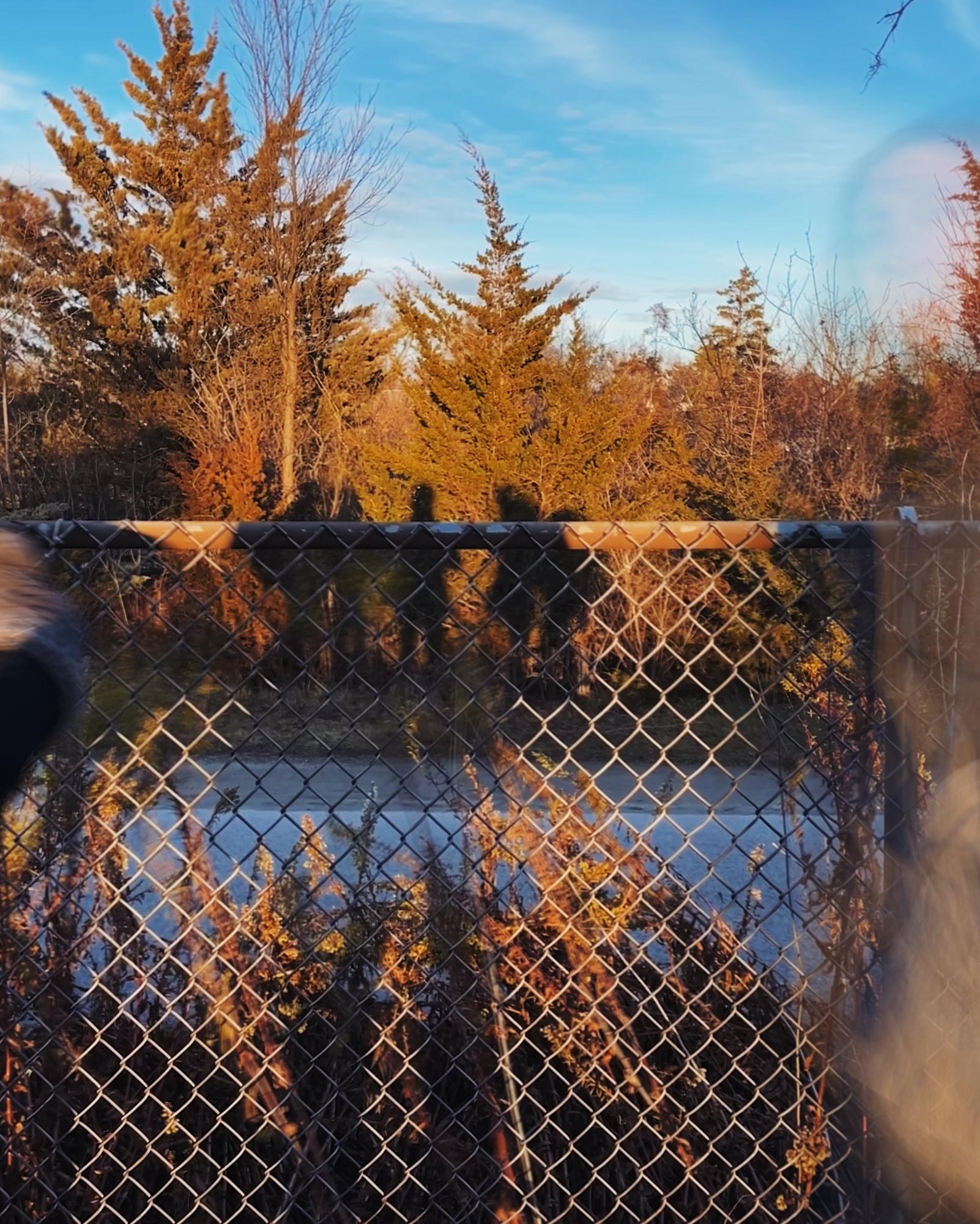
One of Hillhouse’s favorite photos is of her and a few other New Trier teachers waiting for the train after school in December at the Indian Hill Train Station. In the photo, Bolos captures the teachers’ shadows and reflects Ms. Hillhouse’s face almost as a shadow in the frame.
As a person who has known Bolos for a while whom he was like a mentor to, Hillhouse is happy to see another side of Bolos.
“To see his passions outside of his role as a teacher, I just love that he’s willing to share that—willing to share his art, but more than that,” Hillhouse says.
As Bolos retires from teaching this year, his future is full of possibilities. He might try experimenting with different types of photography techniques, such as using double exposure like he did with a passion project during the 2020 pandemic or even make a photography book.
However, while his future art endeavors may be somewhat uncertain, one thing remains true: through his photography, Bolos has given his audience a perspective on different types of people and places they may have never seen before without him.
“I hope that [people] can see a slice of society that they wouldn’t normally see, that gives them insights,” Bolos says.